A Not-so-Lonely Planet

I’m not Lonely Planet’s biggest fan.

Why? You ask.

Because in many ways they uphold the very same ideas that they supposedly seek to get rid of.

Mark Twain (n.d.) famously wrote: “Travel is fatal to prejudice, bigotry, and narrow-mindedness, and many of our people need it sorely on these accounts,” and Lonely Planet (LP) too believes travel can be a force for good, reducing cultural differences and inequalities. 

Travel can certainly be beneficial in many ways (Harrison 2006) – the world is beautiful and full of wonder and I won’t deny that. However as one of the biggest drivers of human mobility across the world, it does play a vital, and sometimes problematic role in “the process of identity formation, the making of place, and the perpetual invention of culture” (Salazar, 2014 p. 16)

Whilst I don’t necessarily disagree, my problem is that the notion that travel is the best way of getting rid of narrow-mindedness, is based upon the assumption that ‘foreign’ cultures are unknowable in the first place, and it is only by spending time with these Others that the traveller can accept their shared (albeit, diverse) humanity, rather than it being a given despite their perceived differences.

This process of inspiring change within the traveller is often founded on a binary between the self and an exotic Other, where the self travels to “’exotic’ third world destinations” that bear absolutely no similarity to the world the traveller has come from. LP features predominantly Western writers providing information for other Western travellers about ‘exotic’ (read: non-Western/alien) destinations with language that heavily emphasises the traditions and “Otherness” of the people they write about. By privileging the Western Orientalist voice over the local, it becomes a vaguely colonialist form of communication that only further marginalises people outside of the “Western world” – they are unable to create themselves, rather, they are whatever the writer shapes them into being.

Kuthodaw Pagoda, Mandalay

This is not just me as an anthropology student blowing things out of proportion; Soranat Tailanga’s (2014) research into the influence of English travel writings on the tourist’s conceptualisation of Thailand found that this medium is particularly powerful in influencing the tourist’s perception over a country and culture. Take the way LP writes about Myanmar (Burma), for example. A country in the exotic South East Asia, it is described as a place where “the traditional ways of Asia endure” (LP 2019), and exploring it can “often feel like you’ve stumbled into a living edition of the National Geographic, c 1910! For all the momentous recent changes, Myanmar remains at heart a rural nation of traditional values” (LP 2019). This language is quite problematic; particularly since you don’t find LP writing about the “traditional ways” of England, America or Australia. These Western places are not exotified, rather it is the charm of their cities and landscapes that provide the traveller with fulfilment rather than the people. An implication emerges, then, that exotic cultures, with their strange traditions and ways of life exist, are frozen in time, for tourist consumption and benefit.

An example of the aesthetically displeasing Mandalay

This idea of culture as static is only exacerbated when a city has the audacity to industrialise and the familiarity of it loses a city’s exotic, alien appeal. According to LP, Mandalay, Myanmar’s second largest city “will never win any beauty contests” (LP 2019) due to the “haphazard construction boom that was never about aesthetics. An ever-growing number of motorbikes and cars clog the roads, too, making for a sometimes smoggy city” (LP 2019); “beyond a functional grid, it doesn’t have a ton of immediate appeal” (LP 2017). Maybe this is just my subjective opinion, but I don’t think “foreign” cities exist to appeal to a tourist’s aesthetics, just as people in these places don’t live to aid the tourist in their process of self-discovery. Culture is not guarded by an Other, neither is it so inherently incomprehensible to the Western traveller that it is something that has to be experienced to be believed. Rather, the “culture” one seeks is more likely people just trying to live their own ordinary, startlingly familiar lives. Essentially, tourism elevates these cultures into something exotic and magical, where the people of this culture merely just see it as their boring, everyday life.

Singapore, with its melting pot of cultural influences, has long been dismissed as a sterile stopover (LP 2017) – likely due to the fact that it is clearly an industrialised nation, in many ways strikingly familiar to the Western gaze.

There are a lot of similarities that can be drawn between travel and ethnographic writing. Like anthropology, travelling involves “the human capacity to imagine or to enter into the imaginings of others” (Salazar, 2014 p. 1) for a particular audience, often to better understand and overcome inequalities in this world. However that also means that they are often complicit in upholding structures that silence and strip agency from the very same people they write about. The ethics of travel and representation are becoming increasingly complicated, both as a tourist and as an anthropologist, but it doesn’t take much to explore this world with a slightly more critical eye.

Banner Source: LP

(All other images are my own)


References:

Abbie’s Emic vs Etic article

Harrison, J 2006, ‘A Personalized Journey: Tourism and Individuality’, in V. Amit and N. Dyck (eds.), The Cultural Politics of Distinction, Pluto Press, London, pp. 110-130.

Imogen’s articles on Anthropology’s past and Ethnocentrism

Lonely Planet 2017, Introducing Mandalay, viewed 1 June 2017, <http://www.lonelyplanet.com/myanmar-burma/mandalay/introduction>

Lonely Planet 2019, Introducing Mandalay, viewed 7 June 2019, <http://www.lonelyplanet.com/myanmar-burma/mandalay/introduction>

Richmond, S 2019, Introducing Myanmar (Burma), viewed 7 June 2019, <http://www.lonelyplanet.com/myanmar-burma/introduction>

Lonely Planet 2017, Introducing Singapore, viewed 1 June 2017, <http://www.lonelyplanet.com/singapore>

Salazar, N.B., and Graburn, N.H.H., 2014, Tourism Imaginaries: Anthropological Approaches, Berghahn Books, New York.

Talianga, S 2014, ‘Thailand through travel writings in English: An evaluation and representation’, Kasetsart Journal of Social Sciences,  vol. 37, pp. 1-6.

Twain, M n.d. (orig. publ. 1869), The Innocents Abroad, Harper & Row, New York.

See Also:

Lani’s article on Eat, Pray, Love

Johnson, A.A. 2007, ‘Authenticity, Tourism, and Self-discovery in Thailand: Self-creation and the Discerning Gaze of Trekkers and Old Hands’, Sojourn: Journal of Social Issues in Southeast Asia, vol. 22, no. 2, pp. 153-178

Kraft, S.E. 2007, ‘Religion and Spirituality in Lonely Planet’s India’, Religion, vol. 37, no.3, pp. 230-242.

Kravanja, B 2012, ‘On Conceptions of Paradise and the Tourist Spaces of Southern Sri Lanka’, Asian Ethnology, vol. 71, no. 2, pp. 179-205

Lisle, D 2008, ‘Humanitarian Travels: Ethical Communication in “Lonely Planet” Guidebooks’, Review of International Studies, vol. 34,  pp. 155-172
Things We Wish We Knew in First Year: Ethnocentrism (and Anthropocentrism)

Given this ‘upside down’ map, consider how the map of the world as we normally see it is ethnocentric. Source
Ethnocentrism – from the Greek ‘ethnos’ and centre

The term was coined in the late 19th Century by the German sociologist Gumplowicz, and soon after popularised by the American sociologist Sumner (Bizumic 2014). Most commonly ethnocentrism is described as a belief that:

  • One’s own ethnic group or culture is at the centre of everything
  • One’s own group is superior to other groups, and all other groups are scaled and rated in reference to it (Etinson 2018, p. 210)

What is often called ethnocentrism’s antithesis, cultural relativism, is meant to overcome ethnocentrism and evolutionist beliefs that there are superior and inferior races and cultures.

Here is a simple explanation of ethnocentrism from Khan Academy, with the example of eating insects.

Everyone is susceptible to ethnocentrism. Like in the video above it can occur in more innocuous ways when we’re like ‘Ewww that’s so weird they do that!,’ but ethnocentrism also occurs in the form of colonialism where people are forced to assimilate into another culture because their culture is deemed morally and otherwise inferior and wrong (Etinson 2018, p. 18).

Another way ethnocentrism is described is not that it is a belief in itself, but that it is a bias that affects the process of forming or maintaining beliefs (Etinson 2018, p.213) . This bias may kick in when:

  • Someone attempts to interpret and evaluate a phenomenon occurring in another culture with limited cultural experience and understanding of that culture
  • Someone projects their cultural experience into a foreign cultural practice blinding them to the underlying values of that practice, which may actually familiar
  • Someone exoticises a foreign culture and over-emphasises differences, sometimes in order to justify colonial domination – two good examples are the early anthropological myth of the ‘noble savage’, and Saïd’s ‘orientalism’
  • Someone dogmatically holds onto a culturally held belief or opinion, for example the role of human activity in causing global warming, despite evidence to the contrary (Etinson 2018, pp. 214-218).

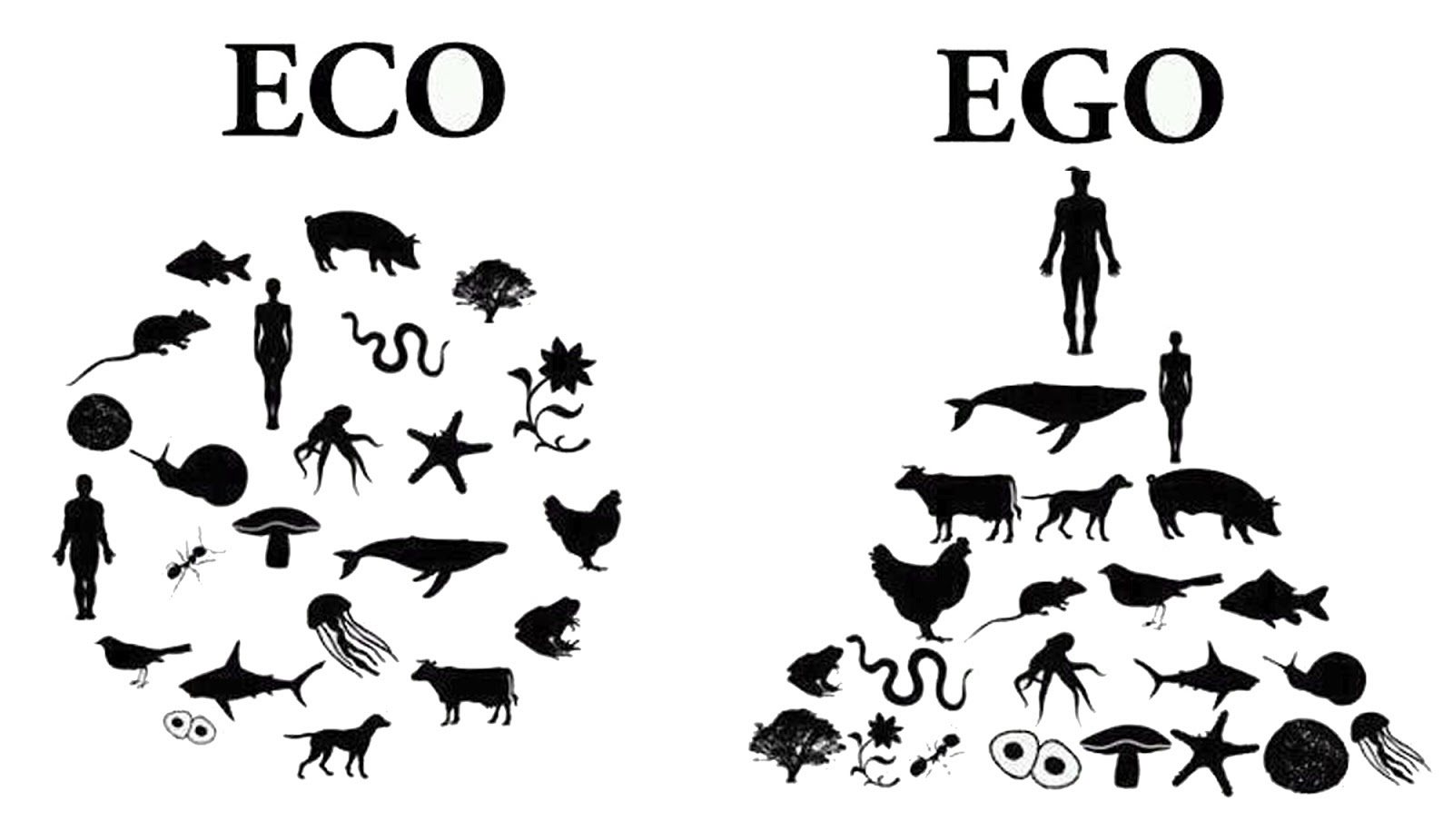
Anthropocentrism - from the Greek 'anthropos' - 'human being' and centre

Gumplowicz compared the term ethnocentrism to geocentrism, the belief that the earth is at the centre of the universe, and anthropocentrism, the belief that humans are the most important entity on the earth and in the universe (Etinson 2018).

And while I think ethnocentrism a really important concept to think through in anthropology, if we are to think about the current anthropology we also need to be thinking seriously about anthropocentrism (which I wasn’t introduced to until third year anthro).

But what is anthropology without humans at the centre? … Simply, it exists!

This is what I wish I knew about in first year—the multispecies turn, and more-than-human anthropology. It’s an anthropology that fights against anthropocentrism and the false dichotomy between humans and Nature that follows. Humans and human culture does not exist outside of nature. Humans are entangled is ecological relations with all sorts of non-human beings. Anna Tsing’s The Mushroom at the End of the World about the matsutake mushroom is one popular example of an ethnography about these entanglements. In an age that some are calling the Anthropocene we, as anthropologists, need to be more aware than ever of our anthropocentrism!


References:

Bizumic, B 2014, ‘Who Coined the Concept of Ethnocentrism? A Brief Report’, Journal of Social and Political Psychology, vol. 2, no. 1, pp. 3-10.

Etinson, A 2018, ‘Some Myths about Ethnocentrism’, Australasian Journal of Philosophy, vol. 96, no. 2, pp. 209-224.

See also:

Sarah and my post on the ‘Anthropo Scene’ Part I and Part II

Dyan’s post on cultural relativism

Beyond Academia: what else can you do with your anthropology degree?

The notion of what ‘the field’ is in anthropology has been expanding over the last few decades. As anthropologist Clifford Geertz is famously quoted saying: ‘The locus of study is not the object of study. Anthropologists don’t study villages (tribes, towns, neighborhoods…); they study in villages.’ (1973, p. 22). Even studying in villages is a bit antiquated in anthropology these days—many anthropologists study communities of practice that occur in many locations or studying the webs that link people and non-human beings across many locations.

But what do anthropologists do if they aren’t researchers in academia…? Not surprisingly, the work that anthropologists do is similarly diverse and expanding.

I interviewed (with Lani’s help) four anthropology graduates and asked them what kind of work they are doing now and how their anthropology degrees have helped them. Maybe it was just a coincidence, or maybe it says something about job opportunities available to anthropologists but two of the five people interviewed worked in user experience and two of the four worked in product design. Meet the interviewees:

Katie

Studied: a Masters in design anthropology (applied anthropology)

Works as: a consultant at a small consultancy Elabor8 on internal employee culture and engagement and product design.

Previously worked: doing user experience at Australia Post

Pasquale

Studied: Anthropology (Honours) and a post grad diploma in IT.

Works as: a user experience consultant at an IT company

Previously worked: in television

Isabella

Studied: Anthropology and Media & Communications

Works as: a freelance digital marketer doing marketing and product design

Paulina

Studied: Anthropology and Social Theory

Works as: a journalist, writer, university journalism teacher and a researcher at the Polish Academy of Sciences working on an argument about contemporary food culture

Previously worked: as an ESL teacher and freelance journalist and as a reporter for Fairfax Media (before it was taken over by Nine), the Polish Press Agency and the Guardian

A side note: I realise this is a bit of a long article, but the following are answers from each interview (either in audio format, transcribed, or notes that I took from a conversation that wasn’t recorded) and edited by myself to answer some broad questions that any job seeker may have. Feel free to skip through and follow the thread of a particular person who you find relatable to your interests, or read all the answers to a particular question that interests you! I hope you enjoy and feel a bit more comfy in your outlook for the future–I know it can be scary wondering what you will do after you finish your degree.

Why is anthropology useful in your work?

Overview: Generally anthropology was seen as useful to people’s work because it has taught them to listen and empathise with other people, to try to understand their behaviour and their lives. This understanding enables the interviewees to solve problems that their customers or clients identify themselves.

Katie:

Pasquale: ‘Anthropology is really about learning how to understand people, how to understand behaviour, how to understand what’s happening. And more and more organisations now really want to know what’s going on, because they realise now that they haven’t been listening, that they haven’t understood about their clients, their customers, their users. They haven’t even really understood their business all that well. And the great thing about anthropology is it gives you tools like ethnography, and, you know, the way you think about bias and what you are bringing to the work, which I think actually helps companies a lot.’

‘The first step in a design thinking model is you’ve got to empathise with the people who are the target of your project. Well, how do you do that? That’s what people learn when you do anthropology: is how to empathise, how to understand what’s going on, how to make sure you’re not bringing your biases to your work, how to make sure you can get information even when you may not have proper access to people. All of that, they’re all things that anthropologists learn to do and work out on a regular basis…It’s also important at other points in the model when you are trying to define the problem. You want to define the problem with the people, not just make it up as you are going along. When you try to come up with other ideas, you want to bring the people along, so that you can brainstorm those ideas. When you are actually prototyping things, you want to make sure you are including them so they can give you a sense that this thing is going to work or not. So throughout that whole design thinking methodology there’s just anthropology at various points, as far as I’m concerned.

Isabella:

Paulina: ‘I think what anthropology taught me was to always analyse the categories we take for granted. Not everybody lives the same, not everybody eats the same and not everybody dies the same. I see over and over again how normative some journalism/writing/academia can be — constantly reaffirming the same structures and the same processes without looking for the differences and contradictions. I grew up bicultural and bilingual, so I already knew this on some level, but anthropology gave me the necessary disciplinary training to analyse it.’

Are there many other anthropologists in your field?

Overview: As anthropology graduates, the interviewees generally felt like they were quite unique in their fields, with the exception of user experience, IT, and marketing being growing fields for anthropologists because companies are seeking them out for the skills and knowledge that they bring. People with social work, legal, psychology, sociology, politics, and history backgrounds often do similar types of work to anthropologists. An anthropology degree can bring an advantageous edge that others don’t have because anthropologists ask different kinds of questions, use different sorts of methods and get different results.

Katie:

Pasquale: ‘Early on I would have said there weren’t that many, but I think what’s happening now particularly in areas like IT, people are looking at anthropology and ethnography and they actually like what they see, because they want people that can be comfortable in planning and in going in and investigating what’s going on somewhere, or what people are thinking…There is a fast growing area of user research…or UX research (which is slightly different)’

Isabella:

Paulina: ‘I think most people writing about Poland for English-language publications — if I restrict it to this example — are politics or history majors. Many of them seem to have done PPE-style degrees at OxBridge-type institutions. They do really good work, but again, some of them seem to reaffirm structures instead of questioning them (reporting on the state and its institutions as if liberal democracy is the only thing to have ever existed), which during this period of political meltdown is more than a little problematic. Anthropologists ask different questions and I think the more they participate in public discourse, the better we will all be. So get to it!’

What are some thoughts and advice for finding the right work using your anthropology degree?

Pasquale: ‘In the mean time you may have to take up jobs that aren’t that funky. But I think once you’ve realised you want to go in a certain direction then you just keep trying to get into that area.’

Paulina: ‘While I was freelancing, I worked as an ESL teacher in Poland and Australia, which was a great fall-back job (actually, teaching is probably the most useful thing I have ever done). And what better place to flex your anthropological muscles than in another country, in a cross-cultural context.’

A note on writing from Paulina: ‘Writing, on the other hand is a lifelong pursuit with no certain outcome. Being instrumental about it can kill it, being too idealistic about it can kill it too — you shouldn’t do it unless it’s something you feel you need to do. Definitely don’t do it if you want people to like you — they won’t.’

Some final advice from Katie


See more:

Geertz, C 1973, The Interpretation of Cultures, New York: Basic Books.

[Images my own from my travels around this continent – I hope they make you feel as calm as they make me feel.]

A few lessons learned from Anthropology’s past

This history of anthropology as a discipline is rife with unethical and dehumanising intentions and methodologies. I think it’s important as student anthropologists to learn from this history—but not to let it get us down too much about the possibilities of the discipline! I know I have had my doubts and felt sheepish to say I was studying anthropology when entering Indigenous studies classes for example, knowing full well how anthropologist’s have been complicit as agents of colonial exploitation and of the genocide of many Indigenous peoples. There are reasons why it has been said that anthropology is the ‘handmaiden’ and ‘child’ of Western imperialism (Gough 1967).

Napoleon Chagnon, is an infamous anthropologist known for his study on the Yanomami people from the Amazon on the border of Brazil and Venezuela, and his book The Fierce People (1968) which falsely described the Yanomami as an essentially violent people (Tierney 2000, p.52). Chagnon’s case is a perfect example an anthropologist who sets out into the field with a ‘scientific’ theory they want to prove (in this case that there is natural selection towards violence in humans), and as a consequence causes insurmountable harm to the subjects of the research and also causes far-reaching, political consequences (Geertz 2001, pp.129-130). His methods to prove this theory were equally as unethical as his intentions. Namely, Chagnon bribed individuals with machetes and axes in exchange for their ‘tribal secrets’ or in exchange for violating their ‘tribal taboos’ (Tierney 2000, p.55), and staged fights between Yanomami for documentary purposes, which then became real fights and but he touted that the whole thing was ‘real’ (Tierney 2000, p.59; Geertz 2001, p.126). Chagnon wanted to confine the Yanomami in a nature reserve where only the only interaction they would have with the outside world would be with scientists who treated them like lab rats (Tierney 2000, p.60).  With the help of Dr. James Neel, Chagnon tested live measles vaccines. When an epidemic broke out that killed large numbers of Yanomami people, Chagnon was quoted saying: ‘That’s not our problem. We didn’t come here to save the Indians. We came here to study them.’ (Tierney 2000, p.60).

Here are also two examples of Yanomami people speaking back: (1) Davi Kopenawa Yanomami (2) Yanomami ask for their blood back (video below)

Is it really worth studying a group of people if you are not doing anything to improve their quality of life or help them make changes in their world that they want to make? I don’t think so.

And this has happened closer to home too. Sir Walter Baldwin Spencer, who has a building named after him at the University of Melbourne, was one of the first anthropologists to study Indigenous Australians in the late 19th century. While his work on their genealogies is still being used today to help in Central Australian land claims, he carried out his anthropological work with a eugenicist mindset (Dobbin 2015). He believed that Indigenous Australians were a race that was ‘doomed to die a slow death to make way for a new super white race’ (Dobbin 2015) and his recommendations to remove Indigenous children from their families at an early age directly influenced the Australian government’s genocidal policies of forced child removals between 1910-1970, which caused the Stolen Generations (Cummings, Blockland & La Forgia 1997, pp. 25-27).

Aims for a better anthropology:

  1. Avoid ethnocentrism, but remember that anthropology is not an ‘objective’ science (if such thing exists), and so every anthropologist much be self-reflexive about the position in which they inhabit and that positions relationship to power.
  2. I would say generally avoid deductive research methods–top-down research approaches that attempt to confirm a pre-formed theory i.e. what Chagnon did. Instead, inductive research methods–bottom-up research approaches that go from observation to broader generalisations of theory can be more useful and ethical. Besides, anthropology is all about being surprised by what you find. You can’t be really surprised if you go in with a theory to prove.
  3. Let’s all work to decolonise this discipline – remember and make others aware its deeply imperial, colonial, racist, genocidal past – and move forward to actually work with the people we study particularly if they are Indigenous peoples or other marginalised groups.

Resources:

Cummings, B, Blockland, J, La Forgia R 1997, ‘Lessons from the Stolen Generations Litigation’, Adelaide Law Review, vol. 19, pp. 25-44.

Dobbin, M 2015, ‘Heart of darkness: Melbourne University’s racist professors’, The Age, 27 November, <https://www.theage.com.au/national/victoria/heart-of-darkness-melbourne-universitys-racist-professors-20151127-gl9whm.html&gt;

Geertz, C 2001, ‘Live among the Anthros’, The New York Review, vol. 48, no. 2, pp. 18-22.

Gough, K 1967, Anthropology and imperialism, Ann Arbor: Radical Education Project.

Tierney, P 2000, ‘The Fierce Anthropologist’, The New Yorker, 9 October.

See also:

Ferguson, B 2015, ‘History, explanation, and war among the Yanomami: A response to Chagnon’s Noble Savages’, Anthropological Theory, vol. 15, no. 4, p. 377-406.

Margaret Mead – Someone you should definitely remember as an Anthro major!

Margaret Mead is best known for her book ‘Coming of Age in Samoa’ which she wrote when she was just 27. She wanted to investigate whether adolescence was a stressful process due to biology or cultural context. How could you analyze this phenomenon within the discipline of psychology? According to Mead you would need to raise a child ‘cultureless’ in order to determine the effects of biology which is virtually impossible. That’s why Mead argued that anthropology could step in and solve problems beyond the field of psychology. In order to understand the role that American culture had on adolescences; she chose to look at a distinctly different culture. In Mead’s eyes Samoa ‘set the stage’ for the perfect experiment. Over the course of 9 months she observed and interviewed 50 Samoan girls aged 9 – 20.  

What were her conclusions?  

In 1928 when Mead’s work was published her conclusions were seen as pretty revolutionary. Her findings challenged the previous belief in the ‘biologically superior’ individual. Instead an individual’s ability to thrive or succumb to stress during adolescence was seen as the result of cultural forces. Mead surmised that the ‘simplistic’ and ‘laidback’ attitude of Samoan culture made adolescence a ‘simple’ matter. In contrast, the overwhelming amount of choice and freedom in American contributed to a great deal of stress and uncertainty for American adolescences. It is important to keep in mind that Mead did not suggest America become more like Samoa in order to solve this issue, but rather that comparison between cultures can illuminate the effect that culture has on an individual.  

“One girl’s life was so much like another’s, in an uncomplex, uniform culture like Samoa, I feel justified in generalizing although I studied only 50 girls in three small neighboring villages.” P. 16 

Image result for margaret mead

Criticism 

Now this is where it gets really intriguing (and just a ‘bit’ unethical) …Since its publication, Coming of Age in Samoa has been met with a number of allegations. There is one section where Mead describes teenage boys masturbating in groups, but it is unclear whether she observed this herself. It is also unclear whether Mead sought parental consent (probs not) from the children’s parents before asking questions about their sexual experiences.  

“There were only three little girls in my group who did not masturbate.” P. 113 

Perhaps most notably is that the girls Mead interviewed are believed to have lied and told her what they thought she wanted to hear. While Mead’s work was revolutionary at the time because it challenged the popular theories in Evolutionary Anthropology (such as the idea that some people’s genes are more superior than others), Mead portrayed America as culturally advanced. 

“Our society shows a greater development of personal.” P. 166  

Why is this important?  

While Mead’s actual findings have been proven flawed for countless reasons, her work is still a valuable source for future anthropological inquiry. At the time Mead’s work was seen as progressive confronting and so it’s important to not fall into the trap of judging her methods by today’s standards. What we can learn from past ethnographies is how the discipline has evolved over time. In addition, we can see how some of the assumptions made in early ethnographies have influenced future works, including our own. For example, Mead attempted to portray the totality of Samoa after the short 9 months she lived there. She also did not disclose her own positionality nor think critically about her own biases and how this impacted the research. Personally, reading Mead’s work has reminded me of the danger when trying to represent the entirety of a situation and to keep in mind that each ethnography is like a limited snapshot of the researcher’s interaction with their subjects. Despite the limitations, the insights are nonetheless valuable as long as we think critically and reflexively about the processes involved.   


References:

Mead, M 1928, Coming of Age in Samoa: A Psychological Study of Primitive Youth for Western Civilisation, Blue Ribbon Books, New York.

Want to know more about anthropology’s unethical past? See also:

Imo’s article https://anthrozine.home.blog/2019/05/26/a-few-lessons-learned-from-anthropologys-past/

Dyan’s article https://anthrozine.home.blog/2019/06/10/go-back-to-where-you-came-from-an-anthropological-look-at-linnaeus-taxonomy-and-classification/

Things We Wish We Knew in First Year: Personhood

What is a person?

Here’s a question you’ve probably never been asked. Surely, I hear you say – as I once did – a person is just a person, a human being, someone who has consciousness and rights, cogito ergo sum, y’know. A person.

Well, you’re not wrong. Personhood, defined succinctly, accurately, yet not completely, is the status of being a person (Lyons 2012).

The slightly less succinct and, I’d argue, more complete definition by Conklin and Morgan (1996, p. 662) sees personhood as a “social status granted – in varying degrees – to those who meet (or perform) socially sanctioned criteria for membership.”

What this means is that personhood is a social construction; what counts as a person, where that threshold is located and what that criteria comprises, differs between and even within societies, as seen in divisive reproductive ethics debates. It’s an intensely contested and indefinable domain further complicated by its varied implications in legal, medical, social and political sectors (Heriot 1996, p. 176).

But what about after birth? Surely there’s no question as to whether a newborn, child, or adult constitutes a person, or even a human? It’s likely you haven’t given this a second thought – perhaps because in the predominant Western tradition, personhood is inseparable from humanhood and bestowed permanently at the time of birth, if not before. In some societies, however, humanhood isn’t guaranteed until the newborn reaches a certain age or performs certain rituals.

For example, Fortes (1987, p. 260) writes that the Tallensi people of North Ghana treat plural births, such as twins or triplets, with suspicion, because they signify the possible embodiment of malicious bush-sprites or Kolkpaarəs. If a twin dies before it reaches the age of four, it is evidence that it was never really a human child. So, humanhood can sometimes be more than a biological, intrinsic birthright, instead a condition that must be proved or earned after birth. Still, being a human may not be enough to be a person: as Fortes notes, only a Tallensi adult with a sibling, who has raised a family, gained autonomy with their father’s passing, and had a “proper” death will be buried in a manner that expresses full-fledged personhood. It must be remembered that conceptions of personhood can change over time and are not homogenous, even within cultures, and that Fortes belongs to a long imperialist tradition of white male anthropologists who tended to present prescriptive, stagnant judgements.

In other cases, greater emphasis is placed on the relation between personhood and the sociality of the body. Personhood for the Wari’, according to Conklin and Morgan (1996, p. 658), is “fluid and contingent”, and may even “be lost or attenuated…with changes in social interactions or bodily composition.” Whilst many Western societies see the body as an individual entity that belongs solely and permanently to one person from birth, others require social interaction with the community to reify an individual’s attainment of personhood. These might include commensality (eating together), being identified with one’s kin, and “sharing and pursuing collective ends” (Callegaro 2012, p. 460).

The question of what constitutes personhood is open-ended: it can be fluid, impermanent, contingent on sociality or humanhood, acquired gradually or all at once. The varied cross-cultural conceptions of personhood after birth are well-suited to a culturally relative perspective and illuminate the importance of recognising one’s own ethnocentric assumptions.


References:

Callegaro, F 2012, ‘The ideal of the person: Recovering the novelty of Durkheim’s sociology. Part 1: The idea of society and its relation to the individual’, Journal of Classical Sociology, vol. 12, no. 3-4, pp. 449-478.

Conklin, BA and Morgan LM 1996, ‘Babies, Bodies, and the Production of Personhood in North America and a Native Amazonian Society’, Ethos, vol. 24, no. 4, pp. 657-694

Fortes, M 1987, Religion, Morality and the Person: Essays on Tallensi Religion, J Goody (ed.), Cambridge University Press.

Heriot, MJ 1996, ‘Fetal rights versus the female body: contested domains’, Medical Anthropology Quarterly, vol. 10, no. 2, pp. 176-194.

Lyons, J 2012, How Do We Judge Nonhuman Beings’ Personhood?, Institute for Ethics and Emerging Technologies, viewed 14 May 2019, < https://ieet.org/index.php/IEET2/more/lyons20121004>

Battle of the Ethics: Subsistence Looting

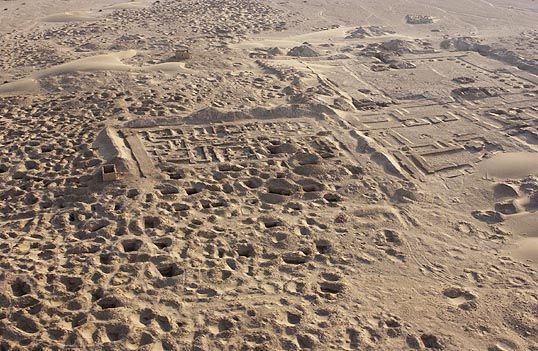
“Some of the 700 Iraqi antiquities…recovered from smugglers along the Syrian-Iraqi borders. Antiquities were looted from Iraq amid the chaos of the 2003 U.S.-led invasion that toppled former Iraqi President Saddam Hussein.” AFP PHOTO/LOUAI BESHARA

In a previous post, I talk about precarity.

My affair with Anthropology post-dates my commitment to Ancient World Studies – the one subject in high school that really interested me. Yet, for me, the most compelling part of the textbook wasn’t actually about the ancient past itself, but the politics of its afterlife: archaeological ethics, repatriation, conservation, 3D-printing and other technologies used in reproduction. The events of 2015 in Palmyra, Syria, including the grievous iconoclasm – that is, the destruction of monuments for religious or political purposes – and Khaled al-Asaad’s refusal to give up the location of ancient artefacts at the cost of his life, cemented my aspirations in becoming an archaeologist and helping safeguard the relics of the past from similar atrocities.

So, when I was speaking to an Ancient World Studies PhD student earlier this year about my interest in anthropology and archaeological ethics, she suggested taking a free online course called Antiquities Trafficking and Art Crime, developed by Dr. Donna Yates at the University of Glasgow. It’s four weeks long, requires no existing knowledge on the topic, and is truly fascinating. I don’t think it’s entirely without fault, but it has some great (mysterious! unresolved!) case studies and encourages active engagement with your instructors and fellow learners, just like an actual class. Overall, I would highly recommend it as an entry point to learning about the theft, trafficking and forgery of art and antiquities.

What I found really interesting about the course was that it offered a distinctly anthropological perspective on looting that I’d previously never considered. When archaeology students learn about the practice of looting, we’re told one thing: the context of the artefact is lost forever, which means we’ll never know how the artefact relates to the site, period, or assemblage, and, consequently, the complete reconstruction of the archaeological record becomes impossible. As Cannon-Brookes (1994, p. 350) argues, artefacts without context are “cultural orphans…virtually useless for scholarly purposes”. With such unequivocally negative representations of looting, it’s difficult to re-imagine how else this narrative can be told.

But if there’s anything anthropology has taught me, it’s that there’s always another side to the story, a side that’s underrepresented or silenced by a more dominant voice. As Dr. Yates (2019) contends, the idea of looters as grave robbers and tomb raiders is far too simplistic. Many of the countries which harbour prolific black markets “have rich archaeological pasts but are economically poor” (Yates 2019) – an effect largely borne by colonialism and conflict, the historic and current imbalances of which continue to perpetuate chronic poverty, health insecurity, and political corruption and instability. These all contribute to an environment characterised by precarity, which forces those living in poverty to turn to “last resorts” like the illicit antiquities trade. A perspective that can provide more emic insights is evidently required by this multifaceted phenomena, and it’s a conversation that anthropology is positioned to initiate.

The pockmarks of looted sites are often compared to the craters of the moon. Source.

People who engage in illicit excavation for “saleable cultural objects due to extreme poverty” are known as “subsistence looters” (Yates 2012, emphasis added; Hollowell 2006). “Subsistence” here implies that the individual is economically disenfranchised: “they are looting for survival, not profit” (Yates 2012). Indeed, profit is almost inconceivable, as Borodkin reports, with looters receiving less than 1% of the final selling price (1995, p. 378). That’s not the only loss looters face: a destroyed site loses its potential for archaeological tourism. The antiquities black market therefore exploits the looters’ precarity, cyclically robbing them of the possibility to invest in a longer-term economically stable future.

Now, I’m not condoning the looting and trafficking of antiquities, but it no longer seems so straightforward to blame looters for putting their basic needs before the preservation of the archaeological record, nor does it seem fair to view looters as the sole perpetrators of the practice. If anything, as Renfrew and Elia (1993) argue, antiquities collectors are accountable for the demand that looters respond to – a demand that originates in the imperialist practices of 17th- and 18th-century Europe.

The sentiments of the academic, authoritative archaeologist have been the most vocal in the vilification of looting. Whilst this has taught student archaeologists that looting is bad and that we shouldn’t do it, this representation hasn’t helped the humanisation of looters nor the prevention of looting. This issue invites a dialogue on ethics between anthropologists and archaeologists to devise a collaborative solution.

Elia (Renfrew and Elia 1993, p. 17) asserts that “the only way to make a dent in the looting problem is to reduce the demand for antiquities by bringing about a change in social attitude whereby collecting is no longer considered socially acceptable.” I think this is true, but it’s still an archaeologist-centric view. Hardy (2012), on the other hand, has found that community-based practices such as education on the value of heritage and the founding of local museums for cultural tourism have been effective in reducing illicit antiquities trafficking in Mali. I would also imagine long-term solutions to economically support subsistence looters and the concurrent prohibition of museums from acquiring artefacts without context would deter the practice as well (a policy that some, but not all, museums have adopted): an artefact with zero value provides no incentive for looting, but it’s imperative that alternative economic opportunities are made available.

Ultimately, there needs to be a reconsideration of looting as a one-dimensional practice, with anthropology playing an important role in diverting focus toward what causes people to resort to subsistence looting in the first place, rather than fixating on its effects on the archaeological record.


References:

Borodkin, LJ 1995, ‘The Economics of Antiquities Looting and a Proposed Legal Alternative’, Columbia Law Review, vol. 95, no. 2, pp. 377-417.

Cannon-Brookes, P 1994, ‘Antiquities in the market-place: Placing a price on documentation’, Antiquity, vol. 68, no. 295, pp. 349–50.

Hardy, SA 2012, ‘looting, the subsistence digging economy in Mali; and stemming the flow of looted antiquities from Mali to the USA’, weblog post 3 April, WordPress, viewed 14 May 2019, < https://conflictantiquities.wordpress.com/2012/04/03/mali-looting-export-usa-import/>

Hollowell, J 2006, ‘Moral arguments on subsistence digging’, in C Scarre & G Scarre (eds), The Ethics of Archaeology: Philosophical Perspectives on Archaeological Practice, Cambridge: Cambridge University Press., pp. 69-94.

Renfrew, C & Elia, R 1993, ‘Collectors are the Real Looters’, Archaeology, vol. 46, no. 3, pp. 16-17.

Yates, D 2012, Subsistence Digging, viewed 14 May 2019, <https://traffickingculture.org/encyclopedia/terminology/subsistence-digging/>.

Is Posthumanism The End of Anthropology?

Giovanni Maisto

The prefix “post” denotes after-ness: posthumous, postgraduate, postmodernism.

So what business does anthropology have in investigating the posthuman?

First, a clarification: there are two distinct definitions of posthumanism currently in use, both of which I find intensely interesting.

Cannon, an informant in the linked article, on biohacking.

Nick Bostrom in Why I Want to Be a Posthuman When I Grow Up (2008) defines a posthuman as someone who has transcended the mental and physical limits of the human form, through genetic enhancements and technologies presently available to us, also known as “biohacking” (“DIY biology”). By limiting methods of bio-modification to those in current use, Bostrom distinguishes posthumanism from the abstract and distant imaginings of a sci-fi universe. This notion of posthumanism is related to transhumanism, which can be seen as a movement “in transit” toward the ultimate goal of reaching a posthuman future by attempting to supersede the human condition as we know it (Birnbacher 2008, p. 95).

On the other hand, N. Katherine Hayles’ (1999) definition of posthumanism is situated in critical social theory and is in reaction to liberal humanism, a philosophical movement introduced by Enlightenment thinkers in the late 17th-century that conceived the human subject as a rational, unitary, autonomous, and stable being. These might sound like good characteristics, but the Enlightenment’s conception of liberal humanism was based on a racist and colonialist exclusionary project that precluded “the savage, the animal, the inferior, and the superstitious from the fully human” (Whitehead 2012, p. 225). It’s clear, then, why anthropologists seek a more pluralistic conception of the human subject.

Firstly, Hayles’ posthumanism privileges information over corporeality; it views having a body “as an accident of history, rather than an inevitability of life” (1999, p. 2). Second, contrary to the rational human model purported by Enlightenment thinkers, consciousness isn’t the most important part of being human. Third, all bodies are an original prosthesis, and technology is just a prosthetic extension of ourselves. Fourth, the human body is able to be merged seamlessly with intelligent machines, and “there is no essential difference between bodily existence and computer simulation, cybernetic mechanism and biological organism” (1999, p. 3).

So, you’re thinking: is there really no difference between humans and robots? Is this the end of us?

Not quite. As Hayles asserts, “the posthuman does not really mean the end of humanity. It signals instead the end of a certain conception of the human, a conception that may have applied, at best, to that fraction of humanity who had the wealth, power, and leisure to conceptualize themselves as autonomous beings exercising their will through individual agency and choice.” (1999, p. 286, emphasis added)

The post in posthuman therefore refers to the pluralistic conceptions of the human subject that critical social theorists seek to replace the singular, stable humanist model presented by the Enlightenment. Such alternatives include the cyborg, proposed by Donna Haraway (1991), which breaks down the boundaries between animal and human, organism and machine, and physical and non-physical.

So how can posthumanism, in both senses of the word, be studied anthropologically? Can anthropologists employ fieldwork methods like ethnography and participant observation on cyborgs? Where is “the field“, what is “the culture”, and is there a protocol for ethics?

For both Bostrom and Hayles, the subject respectively becomes the no-longer-human and the no-longer-humanist. Posthumanism has not merely expanded the scope of what constitutes humanhood, it has questioned the entire notion of humanhood as a bounded concept, and following this, anthropology should accommodate new notions of “the field”, culture, and ethics.


References:

Birnbacher, D 2008, ‘Posthumanity, Transhumanism and Human Nature’, in B Gordijn & R Chadwick (eds.), Medical Enhancement and Posthumanity, Springer, pp. 95-106.

Bostrom, N 2008, ‘Why I Want to be a Posthuman when I Grow Up’, in B Gordijn & R Chadwick (eds.), Medical Enhancement and Posthumanity, Springer, pp. 107-136.

Haraway, D 1991, ‘A Cyborg Manifesto: Science, Technology, and Socialist-Feminism in the Late 20th Century’, in Simians, Cyborgs and Women: The Reinvention of Nature, Routledge, pp. 149-182.

Hayles, NK 2008, How we became posthuman: Virtual bodies in cybernetics, literature, and informatics. University of Chicago Press.

Whitehead, NL and Wesch, M (eds.) 2012, Human No More: digital subjectivities, unhuman subjects, and the end of anthropology. University Press of Colorado.

Welcome to Anthrozine

We would like to acknowledge that we illegitimately live and work on lands and waters stolen from the peoples of the Kulin nation, particularly the Woiwurrung (Wurundjeri Willam) and Boonwurrung (Yalukit Willam) people from here in Narrm (Port Phillip Bay/Melbourne), for which sovereignty was never ceded and for which no treaty has ever been made. We duly pay respect to all those who live here and in the lands beyond, and to their families and elders; those in the past, those in our present time, and those emerging now, onwards to the future.

We would also like to acknowledge the problematic role that our discipline of anthropology has played in relation to First Nations people in this country and beyond in the past, and state our ongoing commitment to correcting this relationship, towards its continual reform as a field of research, study and practice exceptionally based upon justice, emancipation and respect. Decolonize now.

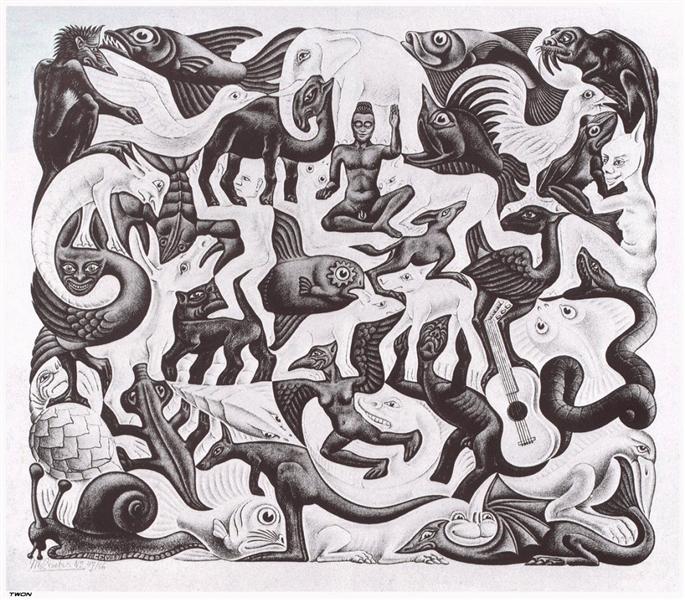
M.C. Escher’s Plane Filling II. An assemblage of creatures.

Hello and welcome to Anthrozine, a blog created by Anthropology Honours students at the University of Melbourne to give you the (abridged) A to Z on anthropology, and a smattering of other digressions that illustrate the expansive philosophies and scopes of anthropology.

This blog forms part of our assessment for the Honours subject Philosophy & Scope of Anthropology, taught by Tammy Kohn, whom you might be lucky enough to meet in your first year subject(s) (we would highly recommend attending lectures for a glimpse of Louie, Tammy’s very sweet dog).

We created this blog with the memory of our undergraduate years in mind: the fresh curiosity and intrigue, the concomitant confusion and disorientation, the persistent tendency to justify human behaviour or cultural habits with anthropological theory…And although we’re still learning, we thought we might be able to demystify some of the pre-eminent ideas and debates taking place in anthropology – from the past, the present, and the future.

Our hope is that after browsing through this blog, you’ll see the mundane and familiar in a new light: birthday celebrations will become sites of liminality, going to the footy will become an instance of collective effervescence, and you’ll start interrogating the ethnocentrism of established assumptions and norms, and consider culturally relative perspectives in encounters with the unfamiliar.

Here you’ll find a collection of definitions and clarifications that we wish we knew in first year (which are by no means expert or absolute), and articles which have been situated in relation to the past, present and future. Rather than strict categories, these links are only one way to guide your perusal of the blog. For example, posts about past debates in anthropology will be found in the “past” link, whilst posts about the directions in which anthropology is heading will be in the “future” link. Some posts will be in more than one, or even all three, and they don’t have to be read in a linear fashion. Some posts also utilise tags, which can be clicked to bring up all other posts on that topic. At the bottom of the blog, you’ll find our author biographies on the left and a search bar on the right.

Please also feel free to comment or ask questions, we hope you enjoy reading this blog as much as we enjoyed writing it!

— Anthropology Honours Class of 2019.